

The core concept of SignalHub is the tracker. A tracker monitors a specific topic and has its own sources, prompt, and settings.
Follow / Fork a tracker
The easiest way to get started is to follow or fork a tracker from the community library. You can explore the community library on search to discover trackers shared by others. You can view each tracker’s prompt, sources, settings, and updates. On any tracker, you can:- Follow: subscribe to its updates without managing any settings.
- Fork: create your own copy, then customize the prompt, sources, and settings. The copy is fully managed by you.
Create a tracker
Step 1: Create a tracker
- After signing in, you will be redirected to your dashboard where you can see your tracker list.
- If this is your first sign-in, the list is empty. Click “New Tracker” to create one. For inspiration, browse the community library in search.
Step 2: Basic settings

- Give your tracker a name to indicate its topic, for example “White House Watch: Immigration and Technology”.
- You can enable or disable the tracker. If disabled, this tracker will be paused and you won’t receive any updates from it.
- You can share your tracker with the community. When public, anyone can find it on search and view its prompt, sources, settings, and updates. But your private notification channels are never shared.
Step 3: AI settings
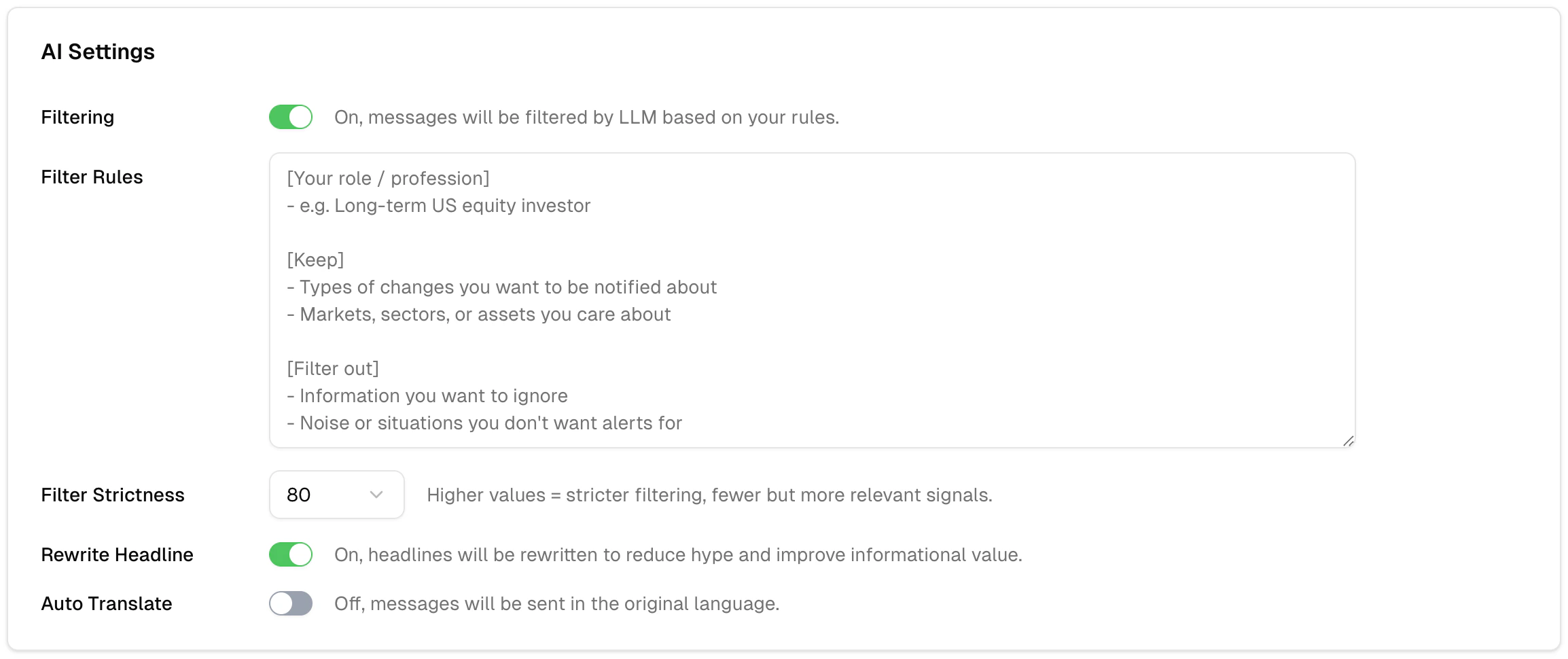
- Filtering: Toggle to enable or disable AI-powered filtering. When on, messages will be filtered by the LLM based on your rules.
- Filter Rules: The most important setting — it tells the tracker what you care about. For example:
- Filter Strictness: Adjust how strictly the AI applies your filter rules. Higher strictness means more aggressive filtering, which may result in fewer signals but higher relevance.
- Rewrite Headline: You can choose whether the AI rewrites headlines. We recommend leaving this enabled, as it helps reduce clickbait and misleading titles.
- Translate Updates: You can enable translation and choose a target language to receive updates in your preferred language.
Step 4: Notification settings
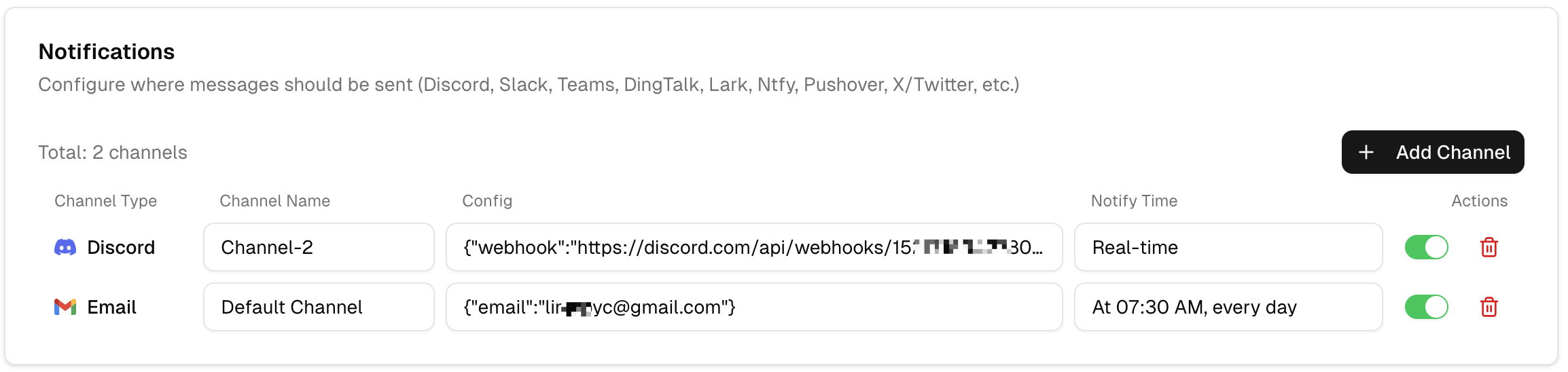
- Choose how you want to receive updates. Available channels include Email, Telegram, Discord, Slack, Microsoft Teams, Google Chat, Ntfy, Pushover, WeCom, Lark, DingTalk, and X/Twitter.
- By default, updates are emailed to your sign-in address once per day at 7:30 AM.
- For the best experience, add a real-time IM (Instant Messaging) channel (e.g., Telegram, Discord or Slack). See the channel setup guides in the Notifications section of the docs.
Step 5: Sources settings
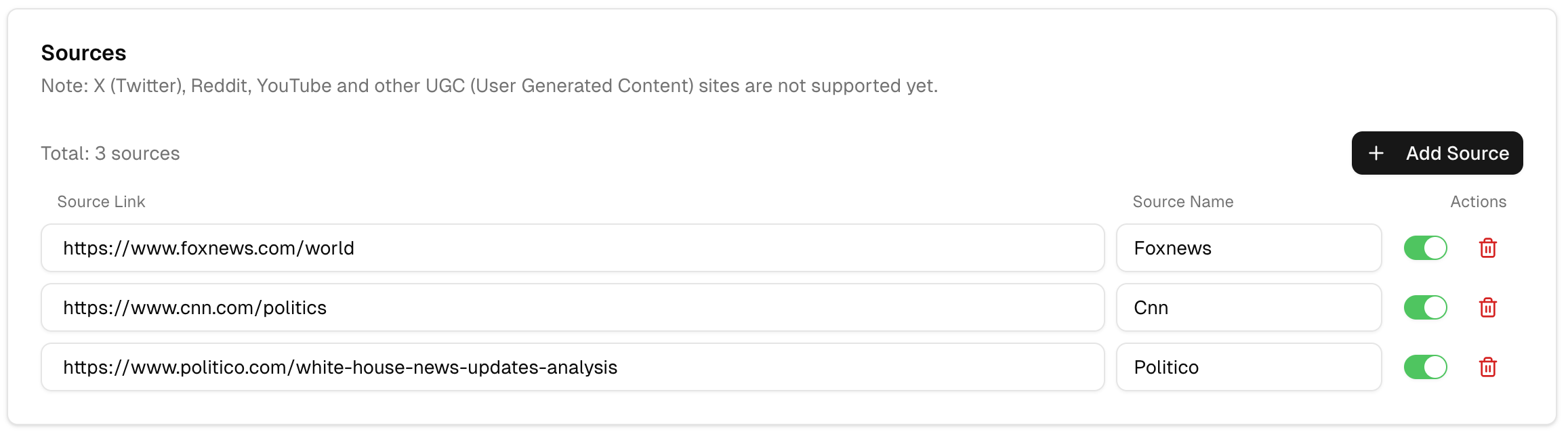
SignalHub supports most websites, including many dynamic and UGC platforms. If a source fails to crawl, please contact us so we can improve support.